
Technical question: How should an operator compare treatment routes for oil-based drill cuttings when liquid recovery, final solids acceptance, safety, logistics and total cost must be considered together?
Direct answer: Select the route from a controlled waste characterization and the final licensed destination, not from equipment name alone. First reduce and segregate the waste, then compare mechanical liquid recovery, thermal treatment, stabilization or biological treatment, and direct licensed disposal against the same mass balance and acceptance criteria. Mechanical recovery can return valuable fluid but may leave solids requiring further treatment. Thermal treatment may achieve a different endpoint but adds energy, emissions and condensate controls. Final selection requires representative testing, site-specific permits and a documented outlet for every recovered or residual stream.
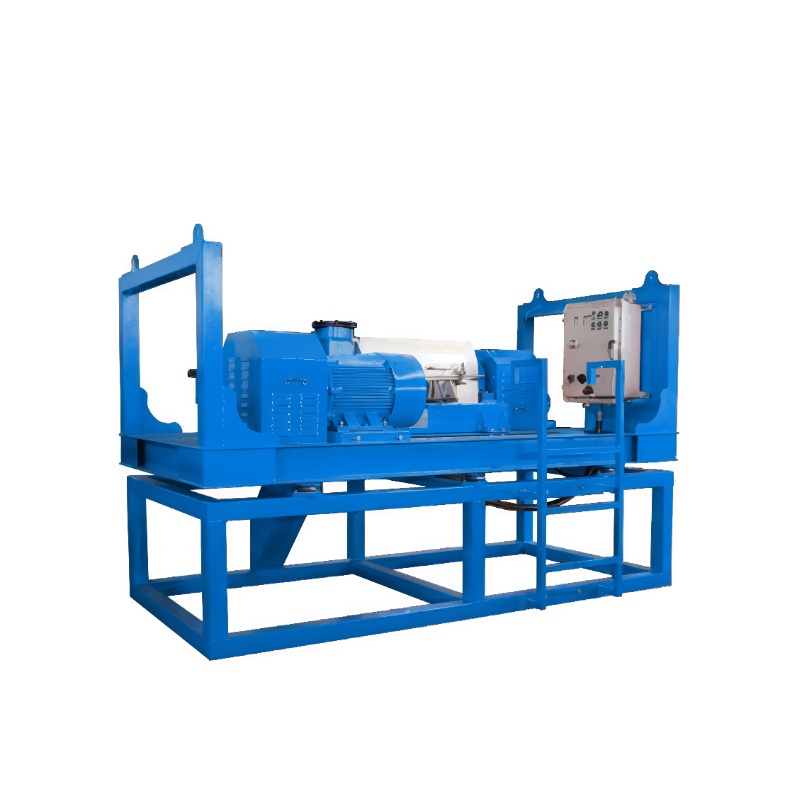
Define the decision boundary before selecting equipment
State whether the project objective is drilling-fluid recovery, transport reduction, compliance with a receiving facility, preparation for further treatment, or a combination. Confirm who owns each output stream and which laboratory method and acceptance limit apply. A machine outlet is not a final disposal route.
Inputs required for a defensible route comparison
- Daily and campaign wet mass, peak rate and variability
- Oil, water and solids fractions measured by an agreed method
- Particle-size distribution, mud formulation, density and additives
- Contaminants that affect reuse, treatment, transport or disposal
- Required recovered-fluid quality and compatibility checks
- Permitted final criteria for solids, water, vapor and recovered liquid
- Hazardous-area classification, fire protection and vapor controls
- Power, fuel, steam, water, chemicals, operators and maintenance support
- Transport distance, packaging, storage time and licensed receiving facilities
Common treatment routes and what each one actually delivers
1. Source control, segregation and enclosed collection
Keep oil-based cuttings separate from water-based waste, rainwater, debris and incompatible chemicals. Record origin and mass. Good segregation improves every downstream option and prevents avoidable treatment volume.
2. Mechanical liquid recovery
A high-G screen or cuttings dryer can recover free liquid from coarse cuttings; a decanter centrifuge may polish the recovered liquid or treat a conditioned fine stream. This route is usually selected to recover drilling fluid and reduce haulage mass. It does not by itself prove that discharged solids meet a regulatory or receiving-facility limit. Verify screen, feed consistency, balance, wear, ventilation, recovered-liquid compatibility and downstream residual handling.
3. Thermal treatment
Indirect thermal desorption or another approved thermal process heats the waste to separate volatile oil and water from solids. Evaluate feed preparation, energy source, heat transfer, vapor containment, condensation, non-condensable-gas treatment, recovered-phase separation, emissions control and hot-solids handling. Performance depends on feed composition, residence conditions and the specified test method; do not promise a residual endpoint without representative testing.
4. Stabilization or solidification
Binders or absorbents may improve handling or reduce leachability for an approved destination. The process increases solids mass and does not automatically remove hydrocarbons. Confirm reagent demand, mixing uniformity, cure behavior, leach or acceptance testing, transport and the licensed final outlet.
5. Biological treatment or land-based treatment
Where permitted, suitable hydrocarbons may be biologically degraded under controlled aeration, moisture, nutrients, temperature and monitoring. Treatability, time, climate, land availability and contaminant profile control feasibility. This is not a universal route for every drilling-waste stream.
6. Direct transfer to a licensed facility
Off-site treatment or disposal can be the lowest-risk choice when volumes are intermittent, site utilities are limited or a qualified facility already exists. Include packaging, manifest, transport, interim storage, acceptance testing and liability—not only the gate fee.
Use one mass balance for every option
For a defined reporting period, reconcile M_feed = M_recovered_liquid + M_recovered_water + M_final_solids + M_other_outputs + M_unreconciled. Report each term on the same wet or dry basis. A useful recovery indicator is R_liquid = M_recovered_liquid / M_feed, but it is not an environmental acceptance criterion. Record sampling points and uncertainty; investigate unexplained loss before claiming performance.
Compare routes with controlled decision criteria
| Decision item | Mechanical recovery | Thermal treatment | Other / off-site route |
|---|---|---|---|
| Primary objective | Recover free drilling fluid; reduce wet mass | Separate volatile oil/water from solids | Meet an approved handling or final-destination need |
| Key evidence | Representative trial, recovered-fluid quality, residual test | Heat-and-mass balance, emissions basis, residual and condensate tests | Treatability/acceptance test and licensed outlet |
| Main boundary | Residual solids may need another step | Energy, vapor, condensate and hot-solids controls | Added mass, treatment time, transport or third-party dependency |
| Commercial basis | Recovered-fluid value, consumables, wear, labor and residual disposal | Fuel/energy, throughput, emissions controls, maintenance and outlets | Reagents, land/time, transport, gate fees and liability |
Evidence grades and acceptance gate
- Grade B: route-specific conclusion supported by representative characterization, documented inputs, traceable laboratory methods, mass balance, equipment or supplier data and an identified receiving criterion.
- Grade C: preliminary route screening and the qualitative comparisons in this guide.
- Grade A: not claimed unless a witnessed, traceable trial or operating record covers the identified feed, equipment, sampling, instruments, units and reviewer.
Do not release a design guarantee until the feed envelope, measurement method, performance boundary and residual destination are written into the test and acceptance plan.
Result
The comparison should produce a selected route and fallback route, process flow, design feed envelope, mass-balance basis, sampling plan, utility list, hazardous-area and emissions controls, recovered-fluid disposition, residual acceptance criteria, licensed final outlets and a lifecycle cost model.
Limitations
This guide is a screening and design-input framework, not a permit, laboratory report or guaranteed performance statement. Waste classification and allowable treatment vary by jurisdiction and receiving facility. Final design requires representative samples, project-specific safety review, environmental approvals, vendor data and written acceptance criteria.
Frequently asked questions
Is a vertical cuttings dryer always the first choice for oil-based cuttings?
No. It is a mechanical liquid-recovery option, not a universal treatment route. The decision depends on feed consistency, recovered-fluid value, downstream solids criteria, hazardous-area controls and the receiving facility’s acceptance limits.
When should thermal treatment be considered?
Consider it when mechanical recovery cannot meet the approved downstream acceptance criteria and when a permitted thermal route, emissions controls, energy basis and recovered-condensate handling are defined. Laboratory characterization and a representative trial are required before making a performance commitment.
Can stabilization or solidification replace hydrocarbon removal?
Not automatically. Stabilization changes handling or leaching behavior; it does not prove that hydrocarbons have been removed. Use it only where the regulator and receiving facility accept the demonstrated test results and the added mass and final destination are controlled.
What data are needed to compare treatment routes?
Provide wet mass and variability, liquid and solids fractions, oil and water content by an agreed method, particle-size distribution, mud formulation, contaminants, site utilities, hazardous-area classification, discharge criteria, transport constraints and the final licensed destination.
How should recovered liquid be returned to the mud system?
Keep it segregated, sample it, and verify compatibility against the drilling-fluid program before reuse. Recovery volume alone does not prove that the liquid is suitable for direct return.
Related technical pages
Drilling-waste and oily-sludge treatment equipment · Decanter centrifuge · Indirect thermal dryer · Cuttings transfer · Solids-control system design